I have taken a little break from writing both my blog and my current book. I felt I had hit a wall with this, as I had no desire or real motivation to write… anything. So, instead, I read and have made my way to the final book of the ACOTAR series. I must admit I am enjoying the change of perspective and narration in these last two books of the series. Where it had pretty much been Feyre’s perspective with Rhysand in parts, the last two books have been a breath of fresh air; hearing from other characters in the third person narrative has been nice to get lost in.
I realise as I write my Coven Series of books that I have done the reverse in the two books of the series so far. I often preferred to read in the third person, so I was an observer in the room, seeing the story being told from multiple points of view, and I wrote my first book, The Last Coven, in this way. Still, I decided to do a duology for the second book, the prequel named A Coven Lost, in first person narrative, and I have enjoyed writing in this way. I also enjoy reading books from this perspective now too… which surprised me.
What I am trying to say is that we should never pigeonhole ourselves when writing or reading. It is good to step out of our comfort zones and try something different or untested. It helps us develop as writers and opens up a whole new world and a different perspective for telling our stories. I must admit, first-person narrative is complex when there are parts of the story to be told that happened when a particular character wasn’t present, but thankfully, I have developed ways of doing this either by character conversation or through the magic my main character possesses which allows her to have visions and travel into the mind of other people, and so the story has been told this way.
Writing in the first person has become natural, and I now find it challenging to go back to the third, but as I move between narratives and versions of my writing, I know this will become second nature as my writing tools and skills are honed and levelled up. Having had a break, I am excited to get back into the writing and keen to finally tell the story of how the coven leader has been found to have been placing forbidden curses within the coven. This is the fictional part of my novel, although the narrative after this, where the church becomes involved in questioning and torturing witnesses and those accused of witchcraft, is based on actual events which took place in Irvine on the West Coast of Scotland in 1618.
I enjoy writing around these actual events, not only because it helps guide my structure but also because it helps to develop the plot and further the development of the fictional characters within my book. True-life characters come to life through these fictional characters, and their stories are told in a way that people today can engage with, empathise with, or understand. The period of history I am writing about was over 400 years ago, and there is not much in the way of records to use as my research, so being able to develop these real-life characters based on what is known helps bring them to life. I can imagine the streets and harbourside walkways that they would have strolled down as I, 400 years on, walk those very same cobbles and promenades, too.
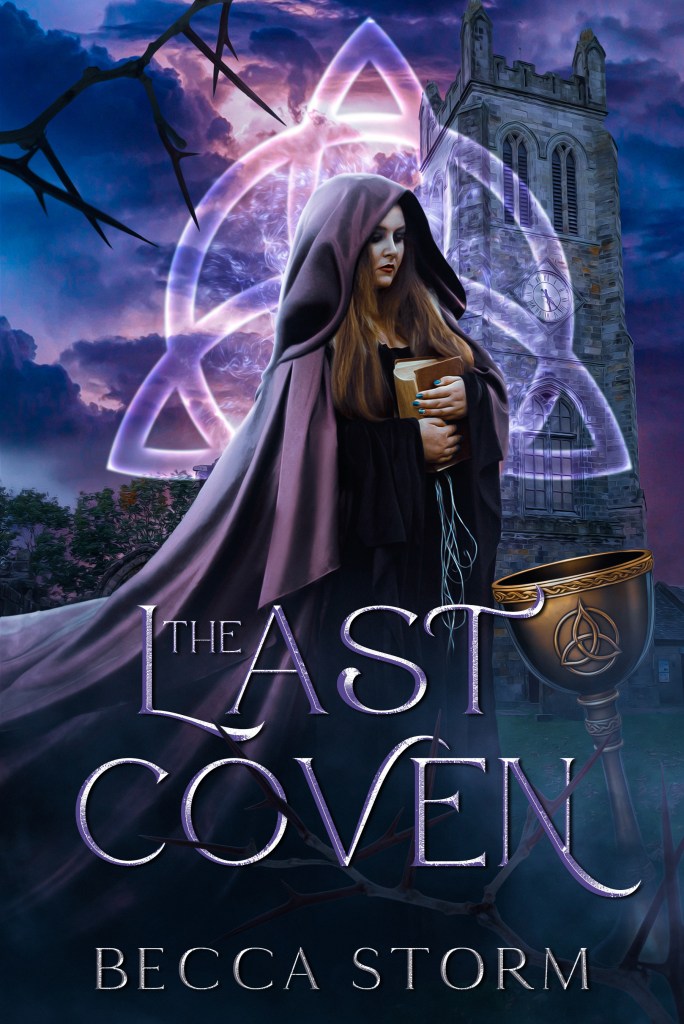
See the link below if you’d like to read my third-person, multiple-points-of-view narrative in the first book of The Coven Series. I have included a short excerpt which might entice you to get the book. It is free under Kindle Unlimited or available for purchase in Kindle and paperback editions. I also hope to have the prequel, the second book of the series A Coven Lost, published by spring next year.
Chapter 1 (March 1650)
Her breath ragged in her throat, and pulling in yet another much-needed lungful of air, she paused beneath the bell tower, wrapping her cape a little tighter around her. The tower’s tall stature, cloaked in darkness, gave her a moment’s respite to catch her breath, hidden as she was in the gloom of one of the small archways that formed its base.
The abbey bell tolled lazily above, and startled, she pressed on, realising time was slipping away. She knew where she had to go. She must get to the water mill at the cobbled bridge by the river. They would be waiting – she couldn’t disappoint them.
This night had been the culmination of months of planning to ensure it did not go wrong. It was too important, and she couldn’t ruin the most significant step her sisterhood had yet taken to preserve its existence. She had been entrusted to deliver the item, wrapped in a silk scarf and tucked carefully into a hidden pocket inside her cape. No one could know she had this, and she alone had to ensure she could deliver it safely to her coven.
In a few hours, the village would learn it was gone. They would then know it had been stolen from the abbey that had been its home for goodness knows how many centuries but only recently discovered hidden in the abbey vaults in an ancient abbot’s resting place. She knew it didn’t belong there. It had been taken from her ancestors in the first instance, many centuries before, and tonight, she was ensuring it was returned to its rightful place—to its rightful holders, where it belonged.
She glanced over her shoulder one last time to be assured she had not been seen. After another measured breath, she hurried down the cobbled street – the tower and the abbey now behind her. She had somehow made it this far and, stepping inside the security of a darkened doorway, looked again to be sure she had not been followed.
Holding the hood of her cape firmly over her head, she felt the fear leave her a little – she was almost there. If she could make her way down through the village unnoticed, she would finally be safe. She was running barefoot, having left her shoes at home. She could not risk someone hearing her footsteps in this quiet and still street, the only sound being the gentle breeze rustling some nearby trees.
Barefoot meant she could move in silence, and tonight, as the full moon cast its glow upon the village, the gentle rustling of the wind in the trees was her comrade, her ally. She tiptoed, picking up speed as she fled down the village street, hearing the steady creak of the wooden wheel as it turned and churned the water. Her breathing became less laboured; her heart beat a little slower as she crossed the cobbled bridge and passed unseen down the path to the water mill.
Bursting through the heavy wooden door, she closed it firmly behind her, sliding the bolt across and sealing herself safely inside. Hunched over with her hands resting on her knees, she tried to regain her composure while she reached and grabbed the hem of her cape, wiping away the sweat rolling down her forehead and into her eyes. Suddenly, there was a shuffle of feet before her; she froze as her eyes darted, alert until they came to rest on Cassandra.
‘Did you get it?’ Cassandra asked, waiting in anticipation for her response.
‘I did. It’s here,’ she whispered, relieved, revealing the item, still wrapped in silk, hidden in the concealed pocket as she opened her cape.
Moving to her with a silenced tension in each step, Cassandra placed her hand around the object. Carefully, she pulled it free from the cape pocket and, with the item finally in her hands, held it gently, like she was holding a precious newborn baby she dared not drop or hurt.
Cassandra was her aunt and had an abundance of thick dark hair that she pulled into a braid, which hung gracefully over one shoulder. She was still beautiful, her sallow complexion letting her appear younger than she was. Her thick dark lashes were a stark contrast to her prominent blue eyes, a feature of her beautiful face often remarked on and much admired. There was a sense of wisdom behind her eyes, a knowledge which seemed much older than her years.
Illuminated by the low glow of the candle, Aradia glanced at Cassandra and observed an intense gold shimmer moving across her aunt’s eyes as she removed the scarf from around the item and finally touched it with her skin. ‘Goodness, it’s just as you thought, Aradia! I can feel it, almost pulsate through my body! This is powerful!’ she gasped as she reached to steady herself, grasping the corner of the table.
Aradia stepped forward and ran her fingers across the smooth gold rim of the slender bronze chalice. She, too, felt the power travel through her, like the energy was travelling just beneath her skin. Her fingers then touched the emblem engraved on the outside of the cup—the Triquetra. The symbol long ago adopted by their coven, an ancient mark representing the earth, the sea, and the sky. It held power and, at its very essence, a link to nature and the cycle of life.
It had been found, by chance, in the abbey’s vaults, hidden in the tomb of an ancient abbot, and displayed on the communion table, being presented as an important Catholic relic featuring the symbol of the Holy Trinity. But Aradia knew its history—she understood its significance and link to their past. It wasn’t a relic belonging to the church but an ancient vessel, once belonging to the Mother Goddess Brigid, containing untapped power that would strengthen and ensure their coven survived.
 THE GOOD, THE BAD AND THE PUBLISHED
Leave a comment